
What Causes Uneven Tire Wear?
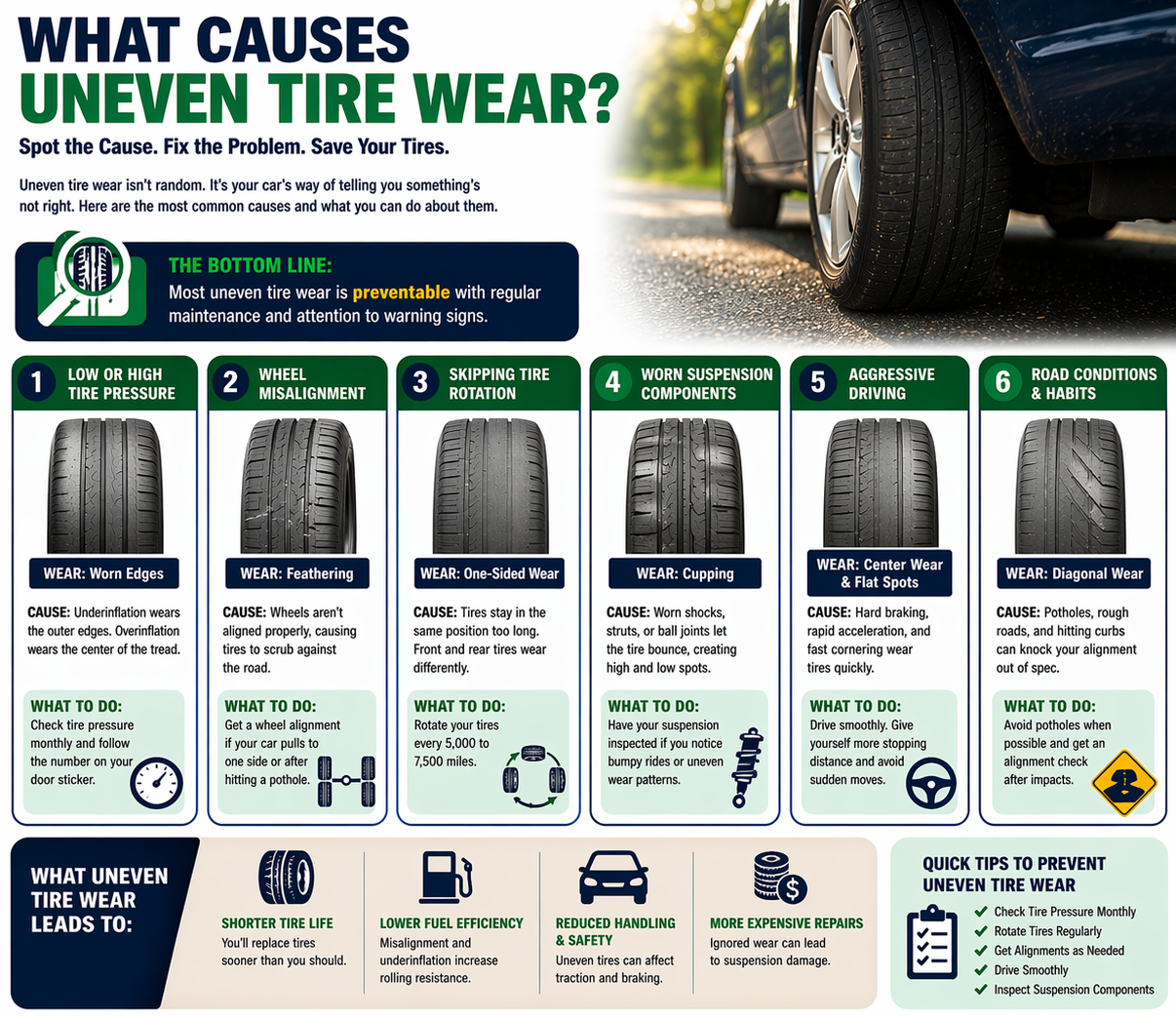
Uneven tire wear is a mechanical signal that something else is going on with your vehicle. When tread wears inconsistently across a tire’s surface, it’s usually pointing to alignment issues, suspension problems, inflation errors, or driving conditions that are stressing the tire unevenly. Ignoring it shortens tire life and compromises traction, handling, and braking distance.
For drivers in East Texas, where road conditions, heat, and daily driving patterns vary widely, understanding what causes uneven tire wear is essential to avoid unnecessary tire replacement and more expensive repairs down the line.
The Most Common Causes of Uneven Tire Wear
Improper Wheel Alignment
Wheel alignment is one of the most common contributors to uneven wear. When your wheels aren’t aligned to manufacturer specifications, the tires don’t contact the road evenly.
- Camber wear: Excessive inward or outward tilt leads to wear on one side of the tire.
- Toe wear: Tires point inward or outward, causing feathering across the tread.
- Caster issues: This is less common, but can affect steering stability and wear patterns.
Even slight misalignment can shave thousands of miles off a tire’s lifespan. If your steering wheel is off-center or the vehicle pulls to one side, it’s time to visit a tire shop for inspection.
Incorrect Tire Pressure
Tire pressure directly affects how weight is distributed across the tread.
- Overinflation causes excess wear in the center of the tire.
- Underinflation wears on the outer edges.
Texas heat amplifies pressure fluctuations, making routine checks essential. A tire that’s consistently underinflated wears faster and increases rolling resistance, costing you fuel efficiency.
Worn Suspension Components
Your suspension system keeps your tires planted evenly on the road. When components wear out, tires begin to bounce, tilt, or shift under load.
Common culprits include:
- Worn shocks or struts
- Damaged control arms or bushings
- Ball joints nearing failure
This often leads to cupping or scalloping, where the tread develops dips or high spots. If your ride feels rough or you hear knocking over bumps, uneven tire wear is likely already happening.
Unbalanced Tires
Tire balancing ensures that the weight is distributed evenly around the wheel. When it’s off, the tire rotates unevenly, causing vibration and patchy wear.
Signs of imbalance:
- Steering wheel vibration at highway speeds
- Uneven tread wear in localized spots
- Reduced ride comfort
Balancing is typically done during tire installation, but weights can shift or fall off over time.
Brake System Issues
Uneven braking force can contribute to irregular tire wear, especially on the front tires. If one side of the braking system applies more force than the other, it creates uneven friction and heat across the tire surface. Over time, this accelerates wear inconsistently.
If you notice pulling during braking or squealing noises, it may be time for brake repair before it impacts both safety and tire condition.
Drivetrain Considerations (Especially AWD Vehicles)
For vehicles with all-wheel drive (AWD), tire wear is more than a maintenance issue. It’s a drivetrain concern. AWD systems rely on consistent tire diameters across all four wheels. When one tire wears more than the others, it can:
- Creates rotational differences
- Cause drivetrain strain
- Damage differentials or transfer cases
That’s why many manufacturers recommend replacing all four tires, or at least ensuring tread depth differences stay within a tight tolerance (often 2/32 inch or less).
When Should You Replace One, Two, or Four Tires?
This is where uneven tire wear becomes a financial decision as much as a mechanical one.
Replace One Tire (Rare Cases)
You can replace a single tire if:
- The other tires are nearly new.
- Tread depth differences are minimal.
- The vehicle is front- or rear-wheel drive.
Replace Two Tires
Recommended when:
- Two tires on the same axle are worn.
- You want to maintain balanced handling.
New tires should always go on the rear axle to reduce the risk of hydroplaning and improve stability.
Replace All Four Tires
Necessary when:
- You drive an AWD vehicle
- Tread depth differences exceed manufacturer limits
- Wear patterns indicate systemic issues
Skipping full replacement on AWD systems can lead to far more expensive drivetrain repairs later.
How Tread Depth Affects Traction and Handling
Tread depth impacts longevity and safety.
- New tires: ~10/32 inch to 12/32 inch tread depth
- Worn tires: Below 4/32 inch begin losing wet traction
- Critical limit: 2/32 inch (legally worn out)
As tread depth decreases:
- Water evacuation becomes less effective.
- Hydroplaning risk increases.
- Braking distances increase significantly.
Uneven wear makes this worse. One section of the tire may still have usable tread, while another is already compromised, creating unpredictable grip.
Warning Signs You Shouldn’t Ignore
Uneven tire wear often shows up before drivers notice performance issues.
Watch for:
- Vehicle pulling left or right
- Steering wheel vibration
- Visible tread differences across the tire
- Increased road noise
- Reduced fuel efficiency
In some cases, warning lights may also appear. If your vehicle triggers a diagnostic alert, pairing tire inspection with check engine light service can help identify underlying mechanical issues affecting overall vehicle performance.
Preventing Uneven Tire Wear
The good news: Most uneven wear is preventable with consistent maintenance.
Follow a Maintenance Routine:
- Rotate tires every 5,000 to 7,000 miles
- Check tire pressure monthly
- Schedule regular wheel alignments
- Inspect suspension components annually
- Balance tires as needed
Routine inspections at a trusted tire shop can catch small issues before they turn into premature tire replacement or costly repairs.
Why It Matters for Drivers in Mabank & Canton, TX
Road conditions, temperature swings, and daily driving patterns in East Texas can accelerate wear patterns if vehicles aren’t properly maintained.
At Burnett Family Tire & Auto Service, drivers benefit from:
- Advanced diagnostic tools
- Skilled technicians trained across multiple vehicle systems
- Access to top tire brands like Michelin®, Bridgestone, Goodyear, and more
- Full-service support, from alignments to brake repair and suspension work
Whether you’re commuting through Canton or driving across Mabank, keeping your tires in proper condition directly impacts safety, fuel efficiency, and long-term vehicle reliability.