
What Causes a Car to Vibrate When Braking?
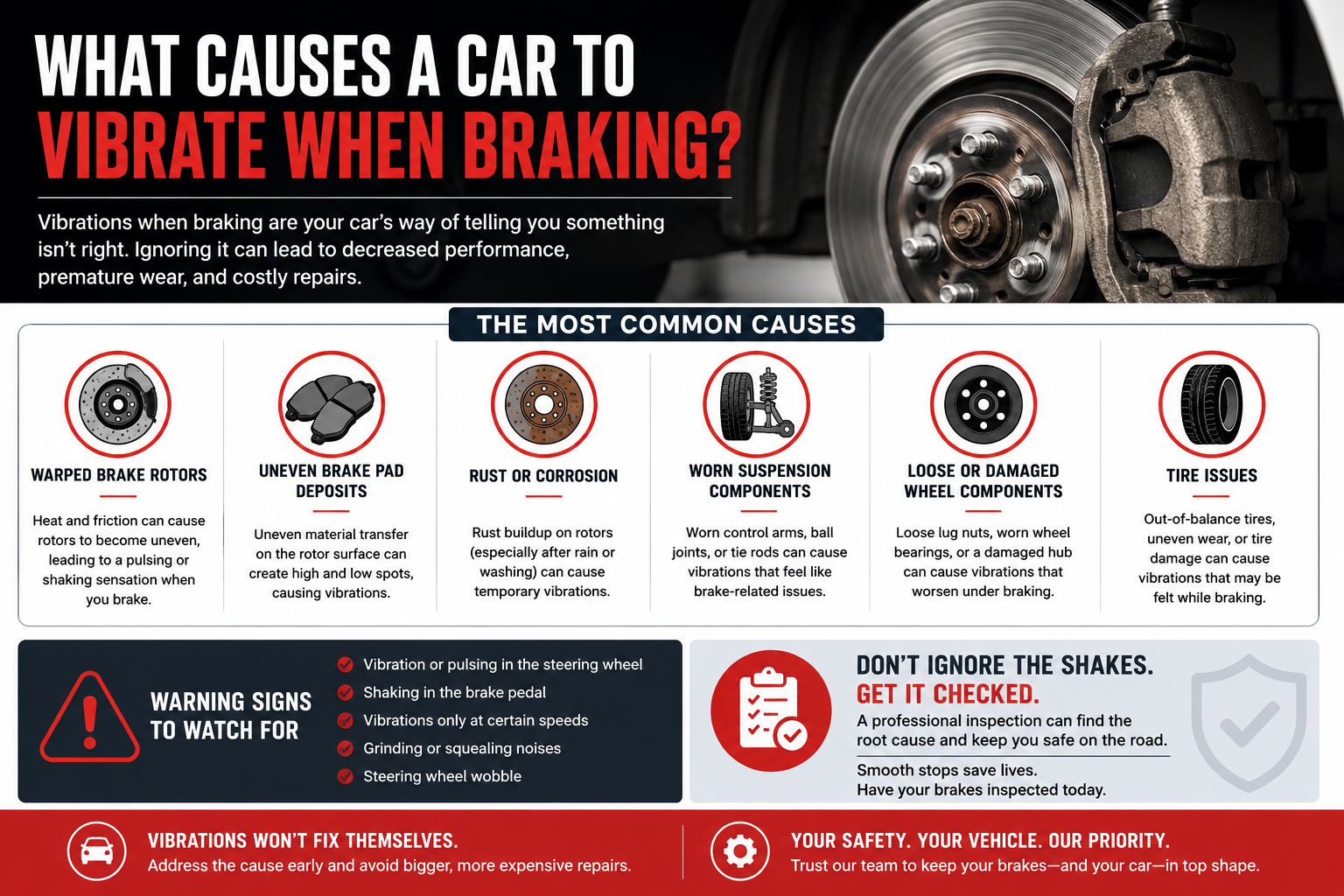
What Causes a Car to Vibrate When Braking?
You press the brake pedal approaching a stoplight and suddenly notice the steering wheel shaking or brake pedal pulsing beneath your foot. It’s an unsettling feeling that shouldn’t be ignored.
Many drivers assume vibration during braking automatically means they need brake repair. The reality is often more complicated. While worn brake components are a common cause, vibration can also stem from tire issues, wheel balance problems, suspension wear, or alignment concerns.
Understanding the possible causes can help you address the problem early before it becomes a larger, more expensive repair.
Why Does a Vehicle Vibrate During Braking?
When your braking system is functioning properly, the brake pads apply even pressure against the rotors, allowing the vehicle to slow down smoothly.
If something interferes with that process, vibration can occur. Drivers may feel the shaking:
- Through the steering wheel
- In the brake pedal
- Through the seat or floorboard
- Throughout the entire vehicle
The location and severity of the vibration often provide valuable clues about the source of the problem.
Uneven Brake Rotors
One of the most common causes of braking vibration is uneven rotor wear. Brake rotors endure extreme heat every time you stop. Over time, repeated heating and cooling cycles can create slight variations in the rotor surface.
When brake pads contact these uneven surfaces, braking pressure fluctuates slightly as the wheel rotates, creating the pulsing sensation many drivers notice.
Common symptoms include:
- Steering wheel vibration while braking
- Pulsing brake pedal
- Reduced braking smoothness
- Increased vibration at higher speeds
A professional inspection can determine whether the rotors can be resurfaced or require replacement.
Worn Brake Pads
Brake pads naturally wear down over time, but uneven wear can also contribute to vibration. Potential causes include:
- Uneven pad wear
- Contaminated brake pads
- Glazed friction surfaces
- Sticking calipers
When pads no longer make consistent contact with the rotor surface, drivers may experience shaking or vibration during braking. Routine brake inspections help catch these issues before they lead to more extensive repairs.
Tire Problems Can Be the Real Cause
Not every braking vibration originates in the braking system. Tire issues are frequently responsible for symptoms that feel like brake problems. Potential tire-related causes include:
- Uneven tread wear
- Internal tire damage
- Tire separation
- Flat spots
- Improper inflation
Since tires are your vehicle’s direct connection to the road, even small defects can create noticeable vibrations.
This is one reason a qualified tire shop should inspect the entire wheel and tire assembly when diagnosing braking concerns.
Wheel Balance Issues
An out-of-balance wheel can create vibrations that become more noticeable during deceleration. As tires wear, wheel weights can shift or become dislodged. The result is uneven weight distribution around the wheel assembly.
Drivers often notice:
- Steering wheel shake
- Vibration at certain speeds
- Increased shaking while slowing down
Wheel balancing is often a straightforward correction that can significantly improve ride quality.
Alignment Problems
Alignment issues may not directly cause brake vibration, but they often contribute to tire wear that eventually creates vibration concerns. Improper alignment can lead to:
- Uneven tread wear
- Pulling to one side
- Reduced tire life
- Steering instability
Over time, these wear patterns can become noticeable when braking. Regular alignment checks help maximize tire life and improve overall vehicle handling.
Suspension and Steering Wear
Your suspension system helps keep the tires planted firmly on the road while maintaining stability during braking. As components wear, excessive movement can develop.
Common culprits include:
- Ball joints
- Tie rods
- Control arm bushings
- Wheel bearings
- Shocks and struts
Worn suspension components can amplify braking vibrations and degrade ride quality. This is why a complete vehicle inspection often provides more accurate answers than focusing solely on the brake system.
East Texas Roads Take Their Toll
Drivers throughout Mabank, Canton, and surrounding East Texas communities frequently encounter rough roads, potholes, construction zones, and uneven pavement. These conditions can accelerate wear on:
- Tires
- Suspension components
- Steering systems
- Wheels
A hard impact may damage a tire, knock the vehicle out of alignment, or place additional stress on suspension components. Over time, these issues can contribute to vibration during braking.
Why Early Diagnosis Matters
Waiting for the vibration to get worse is rarely a good strategy. Small problems often become larger and more expensive when ignored. For example:
- Worn brake pads can damage rotors.
- Alignment issues can destroy tires prematurely.
- Suspension wear can spread to additional components.
- Tire problems can affect handling and safety.
Early diagnosis typically results in lower repair costs and fewer unexpected breakdowns.
Don’t Ignore Other Warning Signs
Braking vibration sometimes appears alongside other vehicle symptoms. You may notice:
- Dashboard warning lights
- Unusual noises
- Steering concerns
- Reduced ride quality
In some cases, drivers discover unrelated issues during the inspection process, such as suspension wear or the need for check-engine-light service.
Combining routine maintenance visits with inspections and check-engine-light service can help catch developing problems before they become major repairs.
Your Local Alternative to the Dealership for Brake and Suspension Diagnostics
At Burnett Family Tire & Auto Service, we help drivers get accurate answers when their vehicles don’t feel quite right. If your car vibrates when braking, the problem may not always be as simple as worn brake pads or damaged rotors. Our experienced technicians take a complete vehicle approach to identify the true source of the issue and recommend the repairs that will restore safety, comfort, and performance.
A vibration during braking can be caused by several different systems, including brake rotors, brake pads, tires, wheel balance, alignment settings, suspension components, or a combination of factors. That’s why a professional inspection is often the fastest and most cost-effective way to determine what’s really happening and avoid unnecessary repairs.
As a trusted alternative to dealership service, Burnett Family Tire & Auto Service provides advanced diagnostics, honest recommendations, and quality workmanship for most makes and models. From brake repairs and wheel alignments to tire services, suspension repairs, and routine maintenance, our team is committed to helping drivers make informed decisions about their vehicles.
If you’re experiencing vibration when braking, don’t wait for the problem to worsen. Early diagnosis can help improve ride quality, protect critical vehicle components, and prevent more expensive repairs in the future.
Need repairs now? Ask about our auto financing options in Mabank & Canton TX, which can help you get important brake